
AMD can severely impact your quality of life if it progresses and/or is left untreated. Understanding the two main forms – dry and wet macular degeneration – is key to early detection and preserving your vision.
What Is Dry Macular Degeneration?
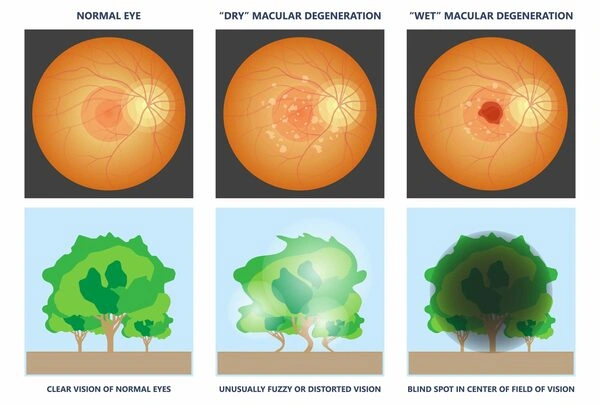
Dry macular degeneration is the more common form, accounting for about 85-90% of AMD cases. It develops gradually as the light-sensitive cells in the macula and supporting tissues break down over time.
Key Features:
- Slow, progressive blurring of central vision
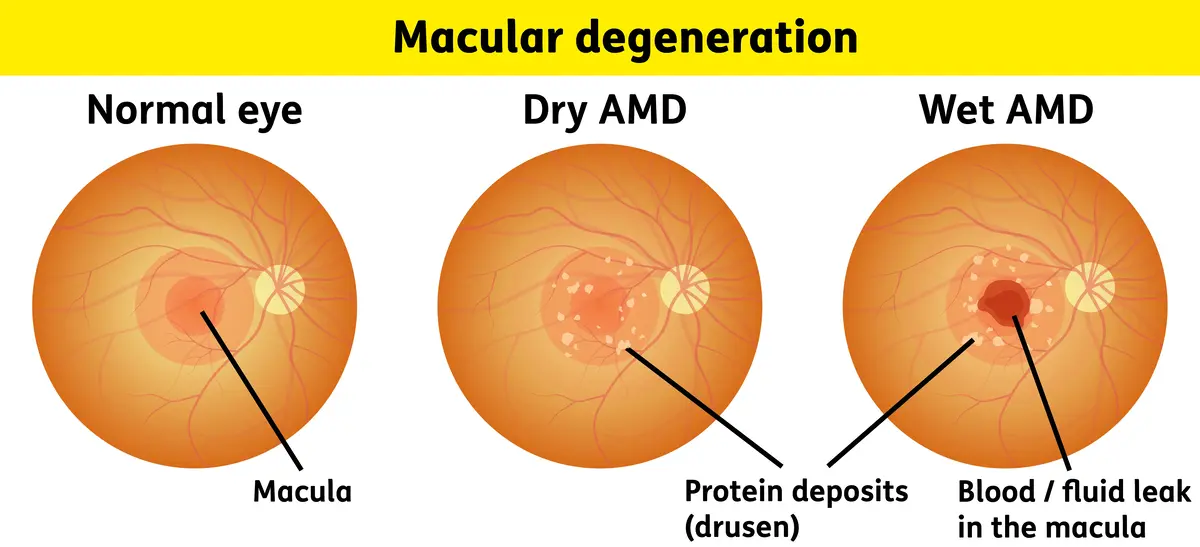
- Presence of drusen, small yellow deposits under the retina
- Gradual thinning of the macula
- Usually affects both eyes, though one may progress faster than the other
Symptoms:
- Blurry or distorted central vision
- Colors appearing less bright or vivid
- Need for brighter light when reading or performing close work
Dry AMD can progress throughout your life and, if severe, can lead to atrophy (scarring) of the macula. This can significantly affect your central vision and is irreversible.
What Is Wet Macular Degeneration?
Wet macular degeneration is less common but more serious. It occurs when abnormal blood vessels grow beneath the retina, leaking fluid or blood and causing rapid damage to the macula.
Key Features:
- Sudden and severe vision loss
- Distortion of straight lines (appearing wavy or bent)
- Rapid central vision changes
If you notice these symptoms, it’s essential to seek immediate ophthalmic care – early intervention can make a significant difference in improving or preserving vision.
Who is at Risk for Macular Degeneration?
Several factors can increase the likelihood of developing AMD:
- Age: Most common in people over 50
- Genetics: Family history of AMD increases risk
- Smoking: You are 20x more likely to develop AMD if you smoke
- Sun Exposure: Prolonged UV exposure may contribute to retinal damage
How is Macular Degeneration Treated?
Macular degeneration is a lifelong, progressive condition. Currently, there is no cure for this disease, but there are interventions that can slow disease progression.
Treating Dry Macular Degeneration:
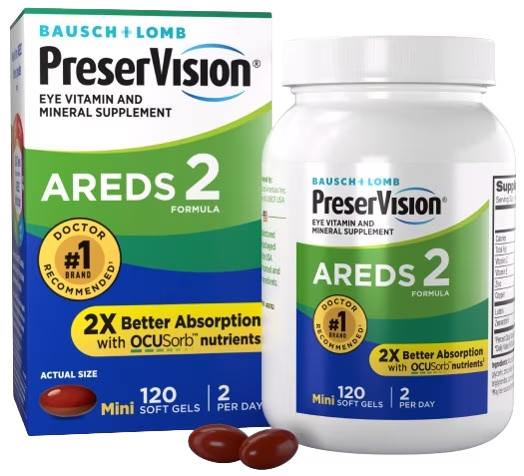
- Nutritional Supplements: The AREDS2 (Age-Related Eye Disease Study 2) formula – containing vitamins C and E, zinc, copper, lutein, and zeaxanthin – can help reduce the risk of AMD progressing.
- Healthy Diet: Focus on leafy greens, colorful fruits and vegetables, and fish rich in omega-3s.
- Lifestyle Changes: Stop or cut back on smoking and protect eyes from UV light with sunglasses outside.
- Regular Monitoring: Frequent eye exams allow for early detection of any transition to the wet form.
- Complement Inhibitor Injections: For advanced, severe, dry AMD with macular atrophy (scarring), injections of medications such as pegcetacoplan (Syfovre) and avacincaptad pegolin (Izervay) may help slow down the progression of atrophy.
Treating Wet Macular Degeneration:
In addition to the above listed treatments for dry AMD, wet AMD can be treated with:
- Anti-VEGF Injections: Medications such as bevacizumab (Avastin), aflibercept (Eylea), or faricimab (Vabysmo) block abnormal blood vessel growth and leakage.
Wait – Injections into my Eye?
Yes! While it can sound intimidating to receive an eye injection, these medications work very well to improve or maintain your vision. For an injection, your eye is numbed with eyedrops and then with local anesthetic. Antiseptic eyedrops are used to ensure that the eye surface is clean and minimize infection risk. Most patients do not feel the injection or only feel slight pressure with the injection. After the injection, the eye may feel slightly scratchy for the rest of the day and you may see a new floater in your vision, but this improves quickly.
How Can I Protect my Vision?
Regular comprehensive eye exams are the best defense against vision loss from macular degeneration. At Ophthalmology Associates, S.C., our ophthalmologists use advanced diagnostic imaging and personalized care plans to detect AMD early and manage it effectively.
If you’ve noticed changes in your central vision or have risk factors for macular degeneration, schedule an eye exam today. Early diagnosis and treatment can help preserve your sight for years to come.
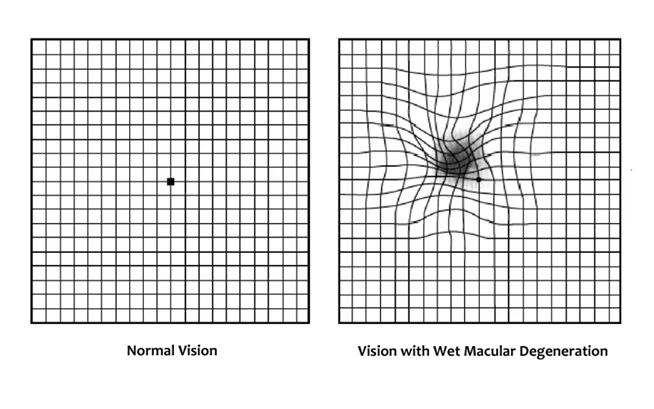
To check your vision at home, you can use the Amsler Grid once or twice a week.
- Wear your reading glasses if you normally use them.
- Hold the grid about 12–14 inches (30–35 cm) from your face in good lighting.
- Cover one eye and focus on the center dot with the uncovered eye.
- While keeping your gaze fixed on the dot, notice whether:
- Any lines appear wavy, blurred, or distorted
- Any areas of the grid look dark, blank, or missing
- Repeat with the other eye.
If you notice any new or worsening distortions, blurring, or missing areas, contact your ophthalmologist immediately. These changes may indicate the development or progression of wet macular degeneration, which requires prompt treatment to preserve vision.
Print Your Own Amsler Grid: https://www.amslergrid.org/AmslerGrid.pdf