Understanding Macular Degeneration
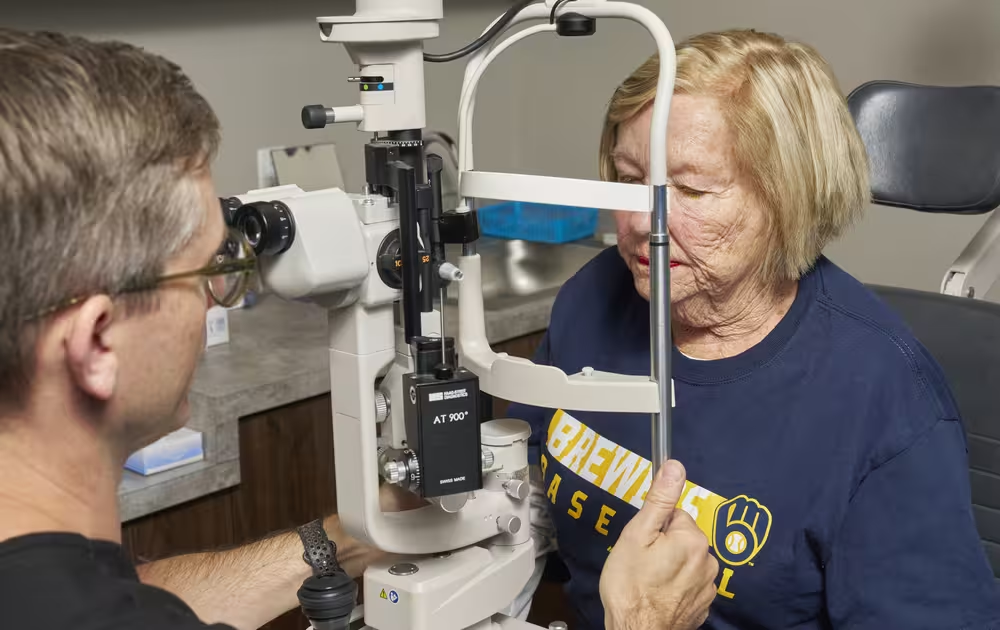
Macular degeneration, also known as age-related macular degeneration (AMD), is one of the leading causes of vision loss among adults over the age of 50. It affects the macula, the central part of the retina responsible for sharp, detailed vision needed for activities such as reading, driving, and recognizing faces. AMD can severely impact your quality of life if it progresses and/or is left untreated. Understanding the two main forms – dry and wet macular degeneration – is key to early detection and preserving your vision. What Is Dry Macular Degeneration? Dry macular degeneration is the more common form, accounting for about 85-90% of AMD cases. It develops gradually as the light-sensitive cells in the macula and supporting tissues break down over time. Key Features: Slow, progressive blurring of central vision Presence of drusen, small yellow deposits under the retina Gradual thinning of the macula Usually affects both eyes, though one may progress faster than the other Symptoms: Blurry or distorted central vision Colors appearing less bright or vivid Need for brighter light when reading or performing close work Dry AMD can progress throughout your life and, if severe, can lead to atrophy (scarring) of the macula. This can significantly affect your central vision and is irreversible. What Is Wet Macular Degeneration? Wet macular degeneration is less common but more serious. It occurs when abnormal blood vessels grow beneath the retina, leaking fluid or blood and causing rapid damage to the macula. Key Features: Sudden and severe vision loss Distortion of straight lines (appearing wavy or bent) Rapid central vision changes If you notice these symptoms, it’s essential to seek immediate ophthalmic care – early intervention can make a significant difference in improving or preserving vision. Who is at Risk for Macular Degeneration? Several factors can increase the likelihood of developing AMD: Age: Most common in people over 50 Genetics: Family history of AMD increases risk Smoking: You are 20x more likely to develop AMD if you smoke Sun Exposure: Prolonged UV exposure may contribute to retinal damage How is Macular Degeneration Treated? Macular degeneration is a lifelong, progressive condition. Currently, there is no cure for this disease, but there are interventions that can slow disease progression. Treating Dry Macular Degeneration: Nutritional Supplements: The AREDS2 (Age-Related Eye Disease Study 2) formula – containing vitamins C and E, zinc, copper, lutein, and zeaxanthin – can help reduce the risk of AMD progressing. Healthy Diet: Focus on leafy greens, colorful fruits and vegetables, and fish rich in omega-3s. Lifestyle Changes: Stop or cut back on smoking and protect eyes from UV light with sunglasses outside. Regular Monitoring: Frequent eye exams allow for early detection of any transition to the wet form. Complement Inhibitor Injections: For advanced, severe, dry AMD with macular atrophy (scarring), injections of medications such as pegcetacoplan (Syfovre) and avacincaptad pegolin (Izervay) may help slow down the progression of atrophy. Treating Wet Macular Degeneration: In addition to the above listed treatments for dry AMD, wet AMD can be treated with: Anti-VEGF Injections: Medications such as bevacizumab (Avastin), aflibercept (Eylea), or faricimab (Vabysmo) block abnormal blood vessel growth and leakage. Wait – Injections into my Eye? Yes! While it can sound intimidating to receive an eye injection, these medications work very well to improve or maintain your vision. For an injection, your eye is numbed with eyedrops and then with local anesthetic. Antiseptic eyedrops are used to ensure that the eye surface is clean and minimize infection risk. Most patients do not feel the injection or only feel slight pressure with the injection. After the injection, the eye may feel slightly scratchy for the rest of the day and you may see a new floater in your vision, but this improves quickly. How Can I Protect my Vision? Regular comprehensive eye exams are the best defense against vision loss from macular degeneration. At Ophthalmology Associates, S.C., our ophthalmologists use advanced diagnostic imaging and personalized care plans to detect AMD early and manage it effectively. If you’ve noticed changes in your central vision or have risk factors for macular degeneration, schedule an eye exam today. Early diagnosis and treatment can help preserve your sight for years to come. To check your vision at home, you can use the Amsler Grid once or twice a week. Wear your reading glasses if you normally use them. Hold the grid about 12–14 inches (30–35 cm) from your face in good lighting. Cover one eye and focus on the center dot with the uncovered eye. While keeping your gaze fixed on the dot, notice whether: Any lines appear wavy, blurred, or distorted Any areas of the grid look dark, blank, or missing Repeat with the other eye. If you notice any new or worsening distortions, blurring, or missing areas, contact your ophthalmologist immediately. These changes may indicate the development or progression of wet macular degeneration, which requires prompt treatment to preserve vision. Print Your Own Amsler Grid: https://www.amslergrid.org/AmslerGrid.pdf Book Your Exam
Understanding Cataracts
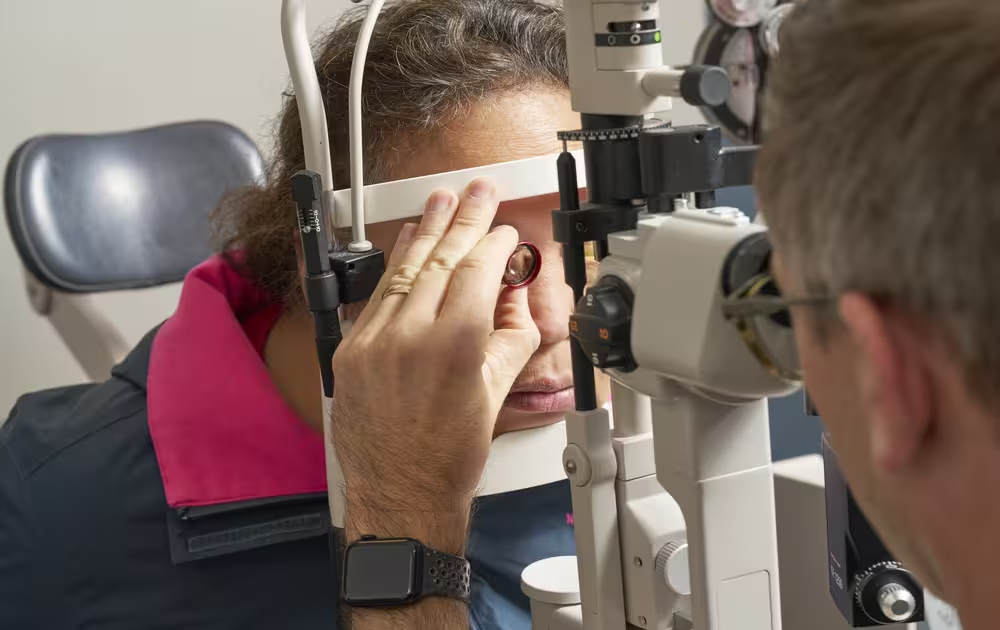
Cataracts are one of the most common causes of vision loss worldwide – but the good news is they are highly treatable. At Ophthalmology Associates, S.C., we specialize in helping patients see clearly again through advanced cataract evaluation and surgery. What Is a Cataract? A cataract occurs when the clear lens inside your eye becomes cloudy, making it difficult for light to pass through and focus properly on the retina. This can cause blurry vision, glare, faded colors, and difficulty seeing at night. Everyone eventually develops cataracts, and ophthalmologists usually start seeing some clouding of the lens in your eye around the age of 50-60. Cataracts typically develop slowly over time, and while they are most often related to aging, they can also occur earlier due to other factors. Who is at Risk for Cataracts? While everyone eventually develops cataracts, certain factors increase your risk and make them progress faster: Diabetes: High blood sugar can accelerate lens clouding. UV Exposure: Prolonged sunlight exposure without proper eye protection can lead to cataract formation. Smoking: Tobacco use increases oxidative stress in the eye, which can lead to cataracts. Certain Medications: Long-term steroid use, for example, may increase risk. Eye Injury or Surgery: Trauma or previous eye operations can lead to cataracts. How are Cataracts Treated? Glasses/Contact Lenses: As cataracts grow, they change your glasses prescription. In the early stages, updating your glasses or contact lens prescription will improve vision. Anti-glare lenses and brighter lighting can also help manage symptoms. However, as cataracts progress, glasses alone will no longer restore clear vision – that’s when cataract surgery becomes the best option. Cataract Surgery: Safe, Effective, and Life-Changing Cataract surgery is one of the safest and most common procedures performed worldwide. During surgery, the cloudy lens is removed and replaced with a clear artificial lens, known as an intraocular lens (IOL). The time to do cataract surgery is when glasses can no longer correct your vision to an acceptable level and when your vision begins to interfere with your daily activities. The procedure typically takes about 15-30 minutes. You are awake during cataract surgery, but you can receive relaxing medications through an IV to keep you comfortable and worry-free. Your eye is numbed with drops for surgery, so the procedure is painless. During surgery, you are looking at your surgeon’s bright microscope light, so you do not see anything coming at your eye. Most people just see shadows, colors, and sparkly lights during surgery. Most patients notice improved vision within days once the eye inflammation and swelling improve after surgery. Recovery is usually quick, with minimal discomfort. What Intraocular Lens Should I Choose For Cataract Surgery? Modern cataract surgery offers a variety of IOL options to fit your visual needs. Your ophthalmologist will help you choose the lens that best fits your visual goals, lifestyle, and eye health. Standard Monofocal Lenses: This is the most common choice for patients. It is covered by insurance with no out-of-pocket cost to you. It does not correct astigmatism, so if you have astigmatism, you will likely need glasses for far, intermediate, and near after surgery for sharp vision. If you do not have astigmatism, this lens can provide you with crisp vision at one distance (far, intermediate, or near) without glasses. Most patients choose a standard monofocal lens focused on distance. You would be able to see clearly for driving and walking around, but you would require reading glasses to see up close. Toric (Astigmatism-Correcting) Lenses: Astigmatism deals with the shape of your eye. If you have astigmatism, you may qualify for a toric lens. Similarly to the standard monofocal lens, the toric lens corrects vision at one distance (far, intermediate, or near) without glasses. Choosing a toric lens will maximize your glasses-free vision if you have astigmatism. There is an out-of-pocket cost for this lens that insurance does not cover. Multifocal Lenses (Astigmatism-Correction Included): The goal of a multifocal lens is maximum freedom from glasses. Multifocal lenses allow each eye to see far, intermediate, and near. Sometimes, patients still need reading glasses for small print or in dim-light environments. To achieve this range of vision, these lenses diverge light, which can lead to a loss of contrast sensitivity and mild decrease in vision quality. These lenses also can lead to glare and haloes around lights. With multifocal lenses, you are compromising to achieve a greater range of vision with a slightly lower quality of vision. If your cataracts are already causing issues with glare/haloes, we do not recommend a multifocal lens, since it may not resolve that issue. These lenses are also not a good option for patients with certain eye diseases (severe dry eye, corneal irregularity, retinal disease) since they will not work as well. There is an out-of-pocket cost for this lens that insurance does not cover. Extended Depth of Focus Lenses (Astigmatism-Correction Included): This is another option to maximize freedom from glasses. These lenses give you some range of vision, but not as much as multifocal lenses. With not as much range, the quality of vision is superior to multifocal lenses. These lenses are a good choice for monovision, where one eye can see clearly from distance to dashboard range, and the other eye can see clearly from dashboard to near range. With monovision, you are glasses independent in most settings. There is an out-of-pocket cost for this lens that insurance does not cover. Light-Adjustable Lenses: The light-adjustable lens allows patients to “test-drive” their vision postoperatively. The lens placed in your eye during surgery can be changed with light treatments after surgery to fine-tune your vision. These light treatments allow you to be more glasses-independent after surgery. This option gives us the most precise cataract surgery outcomes to date. Most often this option gives you a mild version of monovision, with one eye seeing clearly at distance and the other seeing clearly at near. If you feel like your reading is clear after surgery but not at the right distance, we can treat the lens with UV