Age-related macular degeneration (AMD) is a condition that affects the eyes, specifically a small part in the back of the eye called the macula. The macula helps us see things clearly when we look straight ahead, like reading a book or recognizing a friend’s face. As some people get older, this part of the eye can become diseased. AMD is one of the more common reasons older adults have trouble seeing clearly.
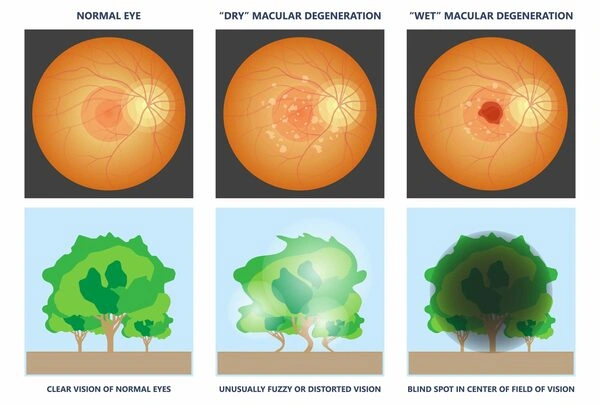
There are two types of AMD: “dry” and “wet.” Dry AMD is the most common type. It happens slowly over time as the macula gets thinner and tiny clumps of waste build up in the eye. Wet AMD is less common but more serious. It happens when new, leaky blood vessels grow from under the macula and cause damage more quickly. Both types can make it hard to see, but wet AMD can cause vision loss much faster.
AMD does not cause total blindness, but it does make the center of your vision blurry or dark. Imagine looking at someone’s face but seeing a big fuzzy spot right in the middle – that’s what it can feel like. People with AMD might have trouble reading, driving, or seeing fine details. The edges of their vision or peripheral vision usually stay normal, which helps them get around safely in everyday life.
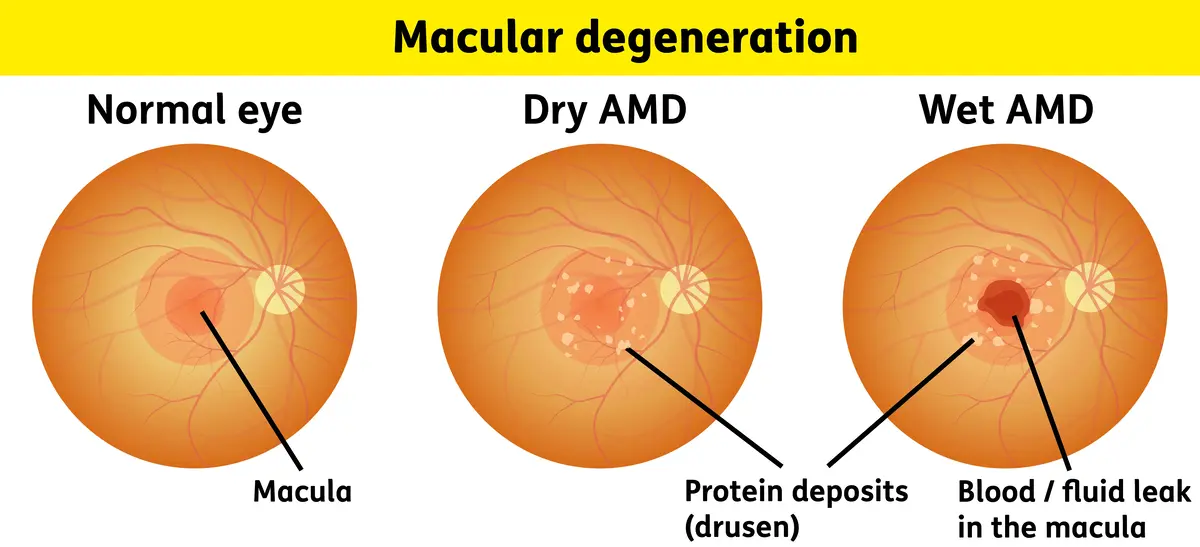
Doctors don’t know exactly why some people get AMD, but there are things that make it more likely. Getting older is the biggest reason – it mostly affects people over 50. Smoking cigarettes, having a family history of AMD, being Caucasian and being exposed to too much sunlight can also raise the risk. Eating healthy foods, especially leafy green vegetables, and wearing sunglasses outside may help protect your eyes.
Right now, there is no cure for AMD, but there are treatments that can slow it down and prevent tissue damage. For wet AMD, doctors can give special shots into the eye that stop those harmful blood vessels from growing. For dry AMD, certain vitamins (AREDS2 supplement) can help slow the damage. We now have injections for advanced dry AMD patients that can slow down the dying of healthy cells in the macula. Scientists are working hard to find better treatments and maybe even a cure someday.
Drs. Aldred, McCanna and Rojas perform intravitreal injections at Ophthalmology Associates, S.C. They tailor treatment regimens to the individual patient. Getting injections into the eye sounds extreme, but we do a great job of numbing the eye to minimize discomfort. These injections are generally tolerated very well by patients.
If someone notices their vision getting blurry or wavy, it’s very important to reach out to us right away, because catching AMD early can make a big difference in vision outcomes.